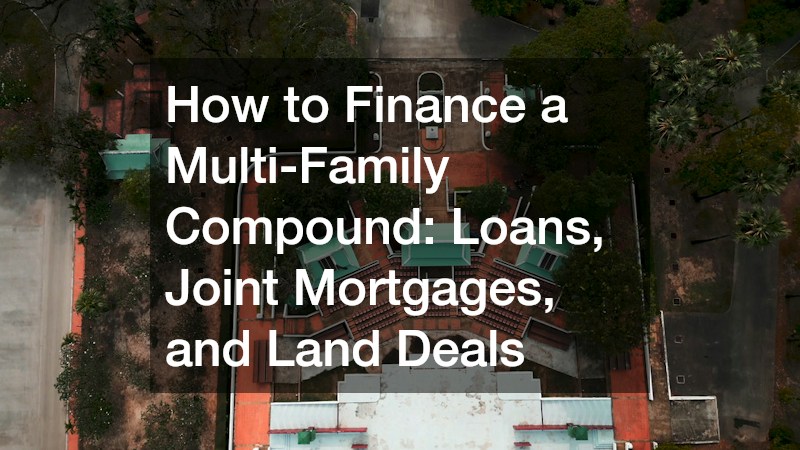
In an era defined by escalating real estate prices, shifting generational priorities, and a growing desire for interconnected community living, the concept of the multi-family compound has emerged as a premier residential model. A family compound—whether designed as a cluster of independent homes on a single parcel, a primary residence flanked by multiple accessory dwelling units (ADUs), or a co-bought rural acreage—offers an ideal balance of privacy, shared resources, and generational proximity. It allows families to pool capital, share daily responsibilities like childcare and eldercare, and build enduring equity in a single, high-value real estate asset.
However, transforming the dream of a shared family estate into a physical reality requires navigating one of the most complex financing landscapes in modern real estate. Traditional residential mortgage underwriting is fundamentally built around a simple model: one buyer purchasing one single-family home on one platted lot. When you introduce multiple co-borrowers, custom multi-structure construction plans, shared land titles, and non-traditional ownership structures, conventional lending frameworks quickly reach their limits. Securing financing for a multi-family compound demands a sophisticated strategy that aligns land acquisition, loan product selection, legal structuring, and long-term operational management.
Land Acquisition and Site Preparation Financing

The foundation of any successful compound project begins with securing the dirt. Because finding an existing property that perfectly fits multiple households is rare, most families choose to acquire land and build from the ground up. Financing unimproved or raw land requires a different financial approach than buying a move-in-ready home, as lenders view undeveloped parcel deals as higher risk.
Secure Raw Land Funding Through Specialized Rural and Agricultural Lenders
When purchasing acreage for a multi-family compound, standard residential mortgage lenders are rarely the best option. Instead, specialized land lenders, community banks, and agricultural credit cooperatives offer products tailored to land acquisition.
- Raw Land Loans vs. Improved Land Loans: Raw land (parcels lacking electricity, water, and road access) typically requires down payments ranging from 30% to 50% alongside higher interest rates. Improved land (parcels with existing road access and utility hookups nearby) requires smaller down payments, often between 15% and 25%.
- Owner Financing (Seller Carryback): Negotiating directly with the landowner can yield flexible terms, lower down payment hurdles, and customized payment schedules while your family works through zoning and entitlement approvals.
- Leveraging Income-Generating Land Models: If your compound acreage includes agricultural zoning, timberland, or agritourism operations such as farm stays, specialized farm credit banks can provide competitive long-term financing by factoring potential farm revenue into the loan evaluation.
Finance Infrastructure, Grading, and Environmental Waste Systems
Acquiring the land is only the first hurdle; transforming raw soil into a buildable site requires significant capital outlay for civil engineering, site grading, and utility installations before home foundations can even be poured.
Construction-to-permanent loans offer an effective path for this phase. These specialized loans combine land acquisition, infrastructure site prep, and home construction into a single financial package with one set of closing costs. During the build out, borrowers pay interest-only installments on drawn funds, which convert into a standard long-term mortgage upon completion.
A critical component of site infrastructure for multi-family compounds is environmental waste management. Servicing four or five distinct households on a single parcel places unique demands on utility systems. Beyond installing high-capacity septic systems or connecting to municipal sewer mains, compounds require structured waste handling. Planning financing for site utility layouts should include dedicated pad construction and access lanes for multi family refuse and recycling systems to ensure compliance with county health codes and maintain clean, odor-free living zones across the property.
Mortgage Structuring: Joint Mortgages vs. Co-Borrowing Frameworks
Once the land and site prep strategies are established, the next challenge is structuring the primary debt across multiple family members or independent household units. How you arrange borrowing liabilities directly impacts individual credit profiles, tax treatments, and long-term financial security.
Evaluate Joint Mortgage Qualification Dynamics Across Multiple Incomes
When multiple family members purchase a property together, lenders look closely at the collective financial strength of all co-borrowers on the application.
- Debt-to-Income (DTI) Calculations: Lenders combine the gross monthly income of all applicants, but they also combine all monthly debt obligations. If one family member carries high student debt or car payments, it can lower the borrowing capacity of the entire group.
- Credit Score Thresholds: Underwriting standards dictate that the qualifying credit score for a joint mortgage is based on the lowest median score among all co-borrowers. A single co-borrower with poor credit can result in higher interest rates or loan denial for the entire family group.
- Impact on Individual Credit Profiles: Signing a joint mortgage makes every co-borrower 100% individually liable for the full loan amount. This added liability can restrict an individual’s ability to secure personal loans for other life expenses, whether financing business expansions or booking all inclusive family vacations.
Utilize Fractional Ownership and Tenancy-in-Common (TIC) Agreements
For families who want to avoid joint liability on a single massive mortgage, Tenancy-in-Common (TIC) structures offer a compelling alternative. A TIC arrangement allows multiple co-owners to hold fractional, undivided interests in a single property.
In sophisticated real estate markets, fractional TIC financing enables each household to secure an individual mortgage for their specific equity share in the compound. If one family member defaults on their fractional loan, the lender forecloses only on that specific fractional share, protecting the remaining family members from losing the entire estate.
Legal Structures and Debt Protection Mechanisms

Mixing family relationships with multi-million-dollar real estate debt requires clear legal boundaries. Relying solely on verbal family agreements or simple joint tenancy deeds leaves the compound vulnerable to individual financial shocks, divorces, or estate disputes.
Form Family LLCs and Property Trusts to Shield Individual Capital
To protect the compound from individual financial liabilities, many families form a specialized entity, such as a Limited Liability Company (LLC) or a revocable living trust, to hold the property title.
Under an LLC model, the family entity owns the land and structures, while individual family members hold equity shares in the LLC governed by an operating agreement. Commercial banks can issue loans directly to the family LLC, typically requiring personal guarantees from primary adult members. This structure isolates personal liabilities—for instance, if an individual family member faces business litigation or medical debt, creditors cannot place a direct lien against the family compound title.
While direct joint tenancy is simple, it carries high personal exposure. A Tenancy-in-Common structure offers fractional deeds and individual loans, protecting co-owners from partner defaults. Holding property through a corporate LLC or trust provides centralized management and strong asset protection against external liens. This corporate title structure also safeguards individual professional assets. For example, self-employed medical specialists, corporate executives, or independent dentists who face professional liability risks can shield their personal living space by placing compound equity into asset-protection trusts or multi-member LLC structures.
Draft Binding Co-Living Agreements to Mitigate Life Changes
The most critical document in compound financing is the internal operating agreement. This contract governs how expenses are divided, how decisions are made, and how unexpected life events are handled.
- Buyout Protocols: Define clear rules for how a family member can exit the compound. The agreement should establish a mandatory appraisal process and give remaining family members the right of first refusal to purchase the departing member’s equity share.
- Default Mechanisms: Establish a financial cushion and clear procedures if a household fails to pay its share of the monthly mortgage or maintenance fees.
- Marital and Inheritance Protections: Require all married co-owners to execute prenuptial or postnuptial agreements ensuring that compound equity remains within the core family bloodline in the event of a divorce.
Working alongside a qualified family law attorney ensures that operating agreements comply with state estate statutes and effectively prevent personal domestic disputes from threatening the property title.
Incorporate Estate and Marital Safeguards into Operating Contracts
Generational wealth transfer is one of the primary drivers of compound living, yet without proper legal planning, the death of a senior family member can trigger severe tax burdens or force a property sale.
Structuring the estate through living trusts or LLC operating agreements allows equity shares to pass seamlessly to heirs without going through public probate court. Furthermore, consulting a family law attorney who is specialized ensures that compound agreements align smoothly with individual estate plans, preventing contested wills from disrupting the compound’s financial foundation.
Operational Financing: Managing Shared Expenses and Revenue Streams

Securing the acquisition loan and completing construction is only the first phase of compound financing. The long-term financial health of a multi-family compound depends on how day-to-day operational expenses, capital reserves, and maintenance obligations are managed across households.
Structure Reserve Funds and Shared Maintenance Assessments
Operating a multi-structure compound is functionally similar to managing a micro-Homeowners Association (HOA). Without a formal system for tracking shared costs, minor disputes over utility bills or road repairs can turn into major family conflicts.
- Centralized Compound Operating Account: Establish a dedicated bank account owned by the family LLC where each household deposits a mandatory monthly assessment.
- Fixed vs. Variable Cost Allocation: Fixed costs (property taxes, parcel insurance, perimeter maintenance) should be split equally or based on square footage ownership. Variable costs (electricity, propane, water) should be individually sub-metered whenever possible.
- Capital Reserve Contributions: A portion of monthly assessments must be allocated to a long-term capital reserve fund to cover major infrastructure costs, such as roof replacements, septic pumping, or driveway repaving.
Proper site management also includes enforcing parking rules and road access across multiple households. To prevent unapproved vehicles, abandoned equipment, or guest parking from blocking emergency access routes, compound operating rules should include explicit authorization for private property impound procedures to legally remove unauthorized vehicles from private compound roads.
Outsource Compound Facilities Operations to Maintain Lender Standards
As a family compound grows in size and complexity—incorporating multiple homes, shared recreational facilities, agricultural zones, or rental guest houses—self-managing daily maintenance can become overwhelming.
Commercial lenders providing LLC-level loans often favor properties that utilize professional management protocols. Engaging experts who specialize in multi family property management protects the physical asset, streamlines vendor relationships, and ensures consistent financial oversight across all residential units. While self-management carries lower direct fees, it frequently leads to family friction, delayed repairs, and budget disputes. In contrast, hiring professional administrators introduces third-party objectivity, predictable costs, professional vendor networks, and clear financial logs.
Partnering with local property management companies brings structured administrative oversight to the compound. Third-party managers collect monthly dues objectively, arrange preventive maintenance, and handle vendor contracts without introducing emotional family dynamics into financial discussions.
Optimize Long-Term Property Upkeep with Professional Administrative Services
Hiring professional management allows families to enjoy the lifestyle benefits of compound living while leaving facility logistics to dedicated experts.
Utilizing a comprehensive property management service ensures that property inspections, utility sub-metering, seasonal maintenance, and legal compliance tasks are handled systematically. Professional managers maintain detailed financial records that can be submitted directly to lenders during annual loan reviews or used by accountants for tax filings, keeping the compound’s financial standing pristine.
Financial Readiness Roadmap for Families
To execute a multi-family compound purchase efficiently, follow this step-by-step financial roadmap:
- Assemble Your Advisory Team: Before looking at land, retain a real estate attorney, a CPA, an estate planning expert, and a specialized land/commercial mortgage broker.
- Define Your Legal Framework: Draft your family LLC operating agreement or TIC contract, establishing buyout terms, expense-sharing models, and ownership percentages.
- Pre-Qualify Co-Borrowers: Review the credit scores, DTIs, and liquid assets of all participating households to determine total combined borrowing capacity.
- Identify and Entitle Land: Select land with appropriate multi-family or agricultural zoning. Ensure the parcel can support multiple utility hookups and waste management configurations.
- Secure Construction-to-Permanent Financing: Roll land acquisition, site development, and multi-structure construction into a unified, cost-effective loan package.
- Establish Operational Reserve Accounts: Set up automated monthly assessment transfers and hire third-party property management to oversee long-term estate operations.
Building a multi-family compound is one of the most rewarding real estate ventures a family can undertake. By approaching the project with a clear business structure, selecting the right financing products, and putting strong legal and operational protections in place, you turn a complex real estate transaction into an enduring, generational asset that builds both family unity and financial security.